

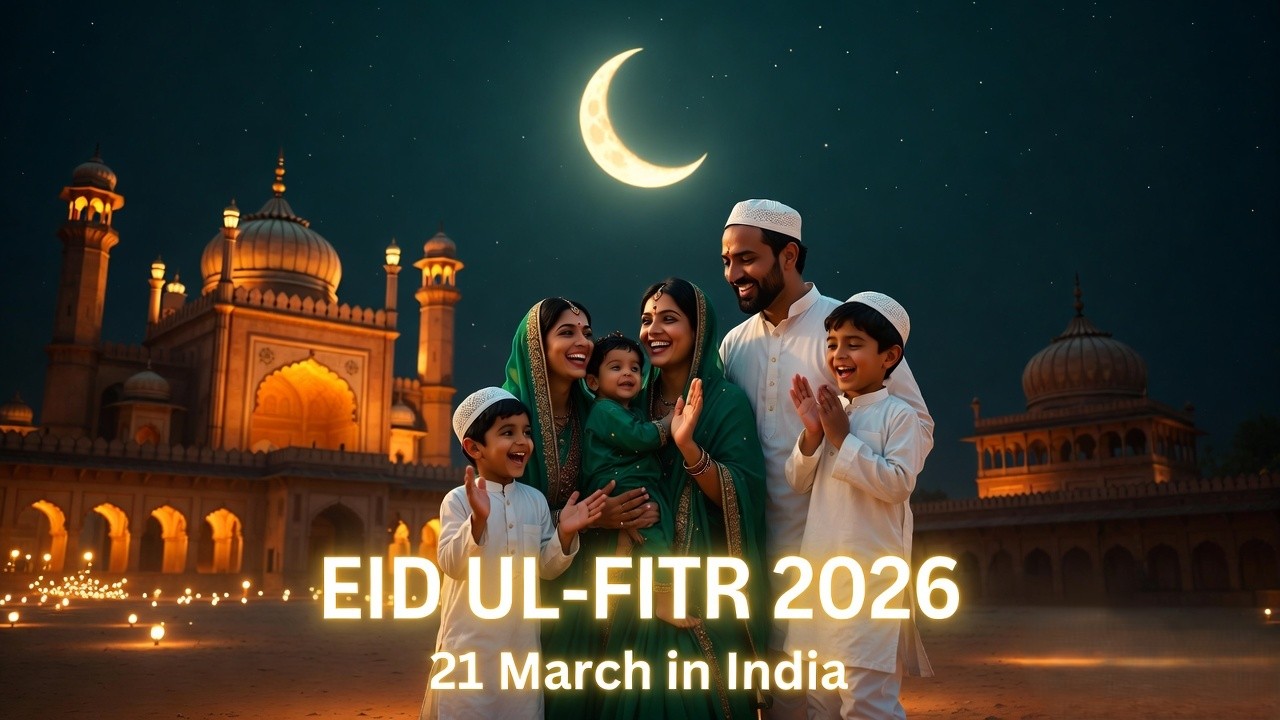





Eid ul-Fitr 2026 in India: The vibrant and culturally rich nation of India is gearing up to celebrate one of its most anticipated and deeply spiritual festivals, Eid ul-Fitr. In the year 2026, the joyous occasion of Eid ul-Fitr will be celebrated with immense devotion and grand festivities on Saturday, March 21, 2026. This holy festival marks the triumphant and spiritual conclusion of Ramadan, the Islamic holy month of dawn-to-dusk fasting, prayer, and profound reflection.
The exact date of Eid always depends on the sighting of the new crescent moon. This year, the Shawwal crescent moon was not sighted on the evening of March 19. Consequently, the holy month of Ramadan completed its full 30-day cycle, officially confirming the celebration of Eid on the 21st of March. Here at Sahi Update, we have curated a comprehensive 1000-word guide covering the historical significance, the beautiful traditions of the moon sighting, and how this magnificent festival is celebrated across the diverse landscapes of India.
The Spiritual Significance of Eid ul-Fitr
Translating directly to the “Festival of Breaking the Fast,” Eid ul-Fitr is a profound reward for the believers who observed the rigorous fasting of Ramadan. It is not merely a day of feasting; it is a profound expression of gratitude to the Almighty (Allah) for granting the strength, patience, and endurance to complete the month-long fast.
The festival is deeply rooted in themes of forgiveness, charity, and brotherhood. It is a day when old grievances are forgotten, and hearts are cleansed. Muslims are encouraged to forgive those who have wronged them and seek forgiveness in return, fostering an environment of ultimate peace and communal harmony.
Key Highlights of Eid 2026
- Date in India: Saturday, March 21, 2026.
- Islamic Month: First day of Shawwal (the 10th month of the Islamic lunar calendar).
- Moon Sighting: Completed 30 days of Ramadan as the moon was absent on March 19.
- Core Practice: Special morning congregational prayers, mandatory charity (Zakat al-Fitr), and grand community feasts.
The Tradition of the Shawwal Moon Sighting
The Islamic calendar is entirely lunar, meaning months begin with the sighting of the new crescent moon. On the 29th day of Ramadan (which fell on March 19, 2026), moon-sighting committees (Ruet-e-Hilal) across India, from the historic Jama Masjid in Delhi to the regional committees in Hyderabad and Lucknow, scanned the evening skies.
When the delicate crescent of the Shawwal moon is not visible due to weather conditions or its astronomical position, Islamic tradition dictates that Ramadan must be completed as a 30-day month. This beautiful, centuries-old tradition keeps the community connected to nature and the cosmos. Upon the declaration that the 30 days are complete, the atmosphere instantly transforms into one of joyous anticipation. Markets light up, preparations hit their peak, and the greeting “Eid Mubarak” begins to echo through the streets.
How Eid ul-Fitr is Celebrated in India
India’s incredible diversity adds unique regional flavors to Eid celebrations, but the core Islamic traditions remain beautifully uniform across the country. Here is how the day unfolds:
- Zakat al-Fitr (The Charity of Fast-Breaking): Before the morning prayers commence, it is obligatory for every financially able Muslim to give Zakat al-Fitr to the poor and needy. This specific charity ensures that the less fortunate can also afford a joyful meal and celebrate the festival without worry.
- The Eid Prayer (Salat al-Eid): The morning begins early. Men, women, and children dress in their finest new traditional attire (often intricately embroidered Kurta-Pajamas, Shararas, and Salwar Kameez). They gather in massive congregations at local Eidgahs (open prayer grounds) or large mosques. The prayer consists of two units (Rakat) followed by a sermon (Khutbah) delivered by the Imam, emphasizing peace, charity, and national harmony.
- The Joyous Embraces: As soon as the prayer concludes, the entire congregation turns to one another. The iconic triple hug, accompanied by the heartfelt greeting “Eid Mubarak” (Have a Blessed Eid), is a powerful symbol of universal brotherhood, wiping away any past enmities.
- The Grand Feast & Sheer Khurma: No Eid in India is complete without a massive culinary spread. The star of the day is undoubtedly Sheer Khurma, a rich, sweet, and creamy vermicelli pudding loaded with dates, dry fruits, and saffron. Families also prepare lavish savory dishes like Mutton Biryani, Haleem, Korma, and Kebabs, hosting friends and neighbors from all religious backgrounds.
- Eidi for the Young Ones: Children look forward to Eid the most, primarily because of ‘Eidi’. It is a beautiful tradition where elders gift crisp new currency notes or presents to the younger members of the family, filling the day with smiles and excitement.
Beautiful Eid ul-Fitr Messages to Share in 2026
In today’s digital age, spreading joy across distances is a major part of the festival. Here are some heartfelt messages you can share with your loved ones on March 21:
- “May the divine blessings of Allah bring you hope, faith, and joy on Eid ul-Fitr and forever. Eid Mubarak 2026!”
- “As we bid farewell to the holy month of Ramadan, may your life be filled with endless happiness, peace, and prosperity. Have a blessed Eid!”
- “Let this Eid be a day of forgiveness, unity, and love. Sending my warmest wishes to you and your beautiful family. Eid Mubarak!”
Conclusion
Eid ul-Fitr is much more than a festival; it is a profound celebration of human resilience, spiritual devotion, and community love. As India prepares to witness the beautiful sights of people hugging outside Eidgahs and sharing bowls of sweet Sheer Khurma on March 21, 2026, the true spirit of the nation—its unity in diversity—shines the brightest. On behalf of the entire Sahi Update team, we wish everyone celebrating a very happy, peaceful, and prosperous Eid. Eid Mubarak!


Leave a Comment