


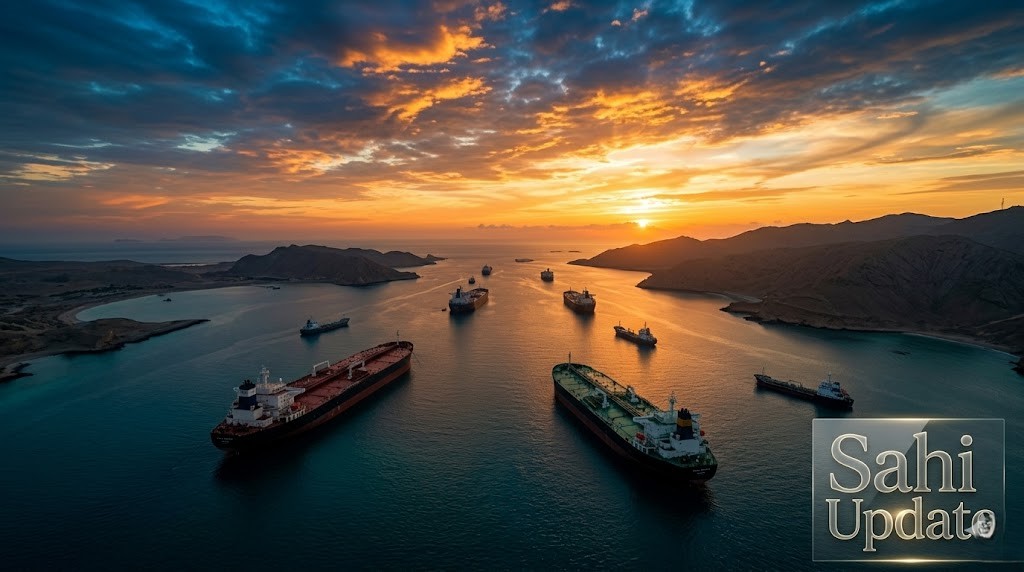





Global Crisis 2026: Iran Responds to U.S. Blockade by Closing Strait of Hormuz
In a move that has sent shockwaves across global financial markets, reports have emerged on April 19, 2026, indicating that Iran has moved to fully close the Strait of Hormuz. This drastic action comes as a direct response to an escalating U.S.-led naval blockade aimed at stifling Iran’s oil exports. The Strait of Hormuz is the world’s most important oil artery, and its closure effectively chokes off a significant portion of the world’s energy supply. As tensions reach a breaking point, the international community is bracing for what could be the most severe energy crisis of the decade.
The Strait, a narrow waterway between the Persian Gulf and the Gulf of Oman, is only 21 miles wide at its narrowest point. However, it carries roughly one-fifth of the world’s total oil consumption. Any disruption here isn’t just a regional issue; it is a global economic catastrophe. With the U.S. maintaining its “maximum pressure” blockade and Iran retaliating with maritime control, the risk of a full-scale military conflict in the Middle East has surged to levels not seen in years. This article provides a deep dive into the current situation and what it means for the world economy in 2026.
Why the Strait of Hormuz is the Global “Choke Point”
To understand the gravity of the situation, one must look at the sheer volume of trade that passes through this narrow passage. It is the only sea route from the Persian Gulf to the open ocean. Major oil producers, including Saudi Arabia, the UAE, Kuwait, and Iraq, rely almost entirely on this route to deliver their crude oil to international markets, especially to energy-hungry nations in Asia like China, India, and Japan.
- Oil Volume: Approximately 20-21 million barrels of oil per day pass through the Strait.
- Liquefied Natural Gas (LNG): Nearly all of Qatar’s LNG exports, a critical energy source for Europe, pass through here.
- Strategic Depth: Because the shipping lanes pass through Omani and Iranian territorial waters, international law regarding “transit passage” is constantly tested during geopolitical conflicts.
Impact Analysis: Oil Prices and Global Economy
| Region / Sector | Immediate Impact | Estimated Long-term Effect |
|---|---|---|
| Global Oil Prices | Surge past $150 per barrel | Possible peak at $200+ |
| Stock Markets | Sharp decline in airline & tech stocks | Recessionary trends in major economies |
| India’s Economy | Rise in petrol/diesel prices & inflation | Pressure on the Indian Rupee (INR) |
| Global Logistics | Supply chain delays for electronics | Increased shipping insurance costs |
The U.S. Blockade and Iran’s Retaliation
The root of this 2026 crisis lies in a series of failed diplomatic negotiations over regional security and nuclear protocols. The United States, citing security concerns, initiated a naval blockade to prevent Iranian tankers from reaching Asian ports. Iran, which has long threatened to close the Strait if its own exports were blocked, finally took the decisive step. By deploying naval mines, fast-attack boats, and anti-ship missile batteries along its coastline, Iran has made it nearly impossible for commercial tankers to navigate the passage without extreme risk.
International maritime insurance companies have already suspended coverage for vessels planning to transit the Persian Gulf. This “de-facto” closure has led to dozens of tankers being stranded in the Gulf, unable to deliver their cargo. The U.S. Fifth Fleet, based in Bahrain, is reportedly on high alert, but experts warn that clearing the Strait of mines and threats would take weeks, if not months, of high-stakes military operations.
Geopolitical Reactions: China, India, and the EU
The reaction from the world’s major powers has been swift and concerned. China, which imports a massive portion of its oil through the Strait, has called for “immediate restraint” and has reportedly opened emergency channels with Tehran. India, equally vulnerable to energy price hikes, is facing an internal economic challenge as the cost of imports threatens to widen its current account deficit. The European Union, already struggling with energy transitions, is looking at a winter of potentially record-high heating and electricity costs.
The Risk of a “Great Energy War”
The primary concern for 2026 is that this maritime standoff could escalate into a kinetic war. If the U.S. and its allies attempt to break the blockade by force, Iran has signaled it will target energy infrastructure across the region. This “all-or-nothing” strategy by Tehran is designed to force the international community to pressure Washington into lifting the blockade. However, the risk of a miscalculation on either side is extremely high, and a single stray missile could ignite a theater-wide conflict involving multiple nations.
Conclusion
The reports of Iran closing the Strait of Hormuz in April 2026 represent a turning point in modern geopolitics. While the situation remains fluid, the immediate consequences are clear: higher energy costs, global economic uncertainty, and a world on the brink of a major conflict. For the average citizen, this means preparing for inflation and supply chain disruptions. As diplomatic efforts continue behind closed doors, the world watches the narrow waters of Hormuz with bated breath. For the most accurate and real-time updates on this developing story, stay tuned to sahiupdate.com. We will keep you informed as the 2026 global energy landscape continues to shift.


Leave a Comment